


19 May Essential Tools for Upholstery: Complete Guide to Professional Furniture Restoration Equipment
Whether you’re restoring a vintage armchair or breathing new life into your grandmother’s sofa, having the right tools for upholstery work can mean the difference between a professional-looking result and a frustrating DIY disaster. The world of upholstery requires specialized equipment that goes far beyond your typical household toolkit, and understanding what each tool does and when to use it is crucial for anyone serious about furniture restoration or reupholstering projects.
Essential Hand Tools for Upholstery Projects
Every upholsterer’s toolkit starts with fundamental hand tools that have remained virtually unchanged for centuries. These time-tested implements form the backbone of any upholstery project, whether you’re working on a simple dining chair or tackling a complex tufted headboard.
The upholstery hammer, also known as a magnetic tack hammer, features one magnetized end that holds tacks in place while you position them precisely. Unlike regular hammers, these are lightweight with smaller heads, allowing for controlled strikes in tight spaces without damaging surrounding fabric or wood frames.
Equally important are upholstery shears, heavy-duty scissors specifically designed to cut through multiple layers of thick fabric, batting, and even leather. These aren’t your grandmother’s sewing scissors; they feature longer blades, often 10-12 inches, with ergonomic handles that reduce hand fatigue during extended cutting sessions.
Removing and Stripping Tools
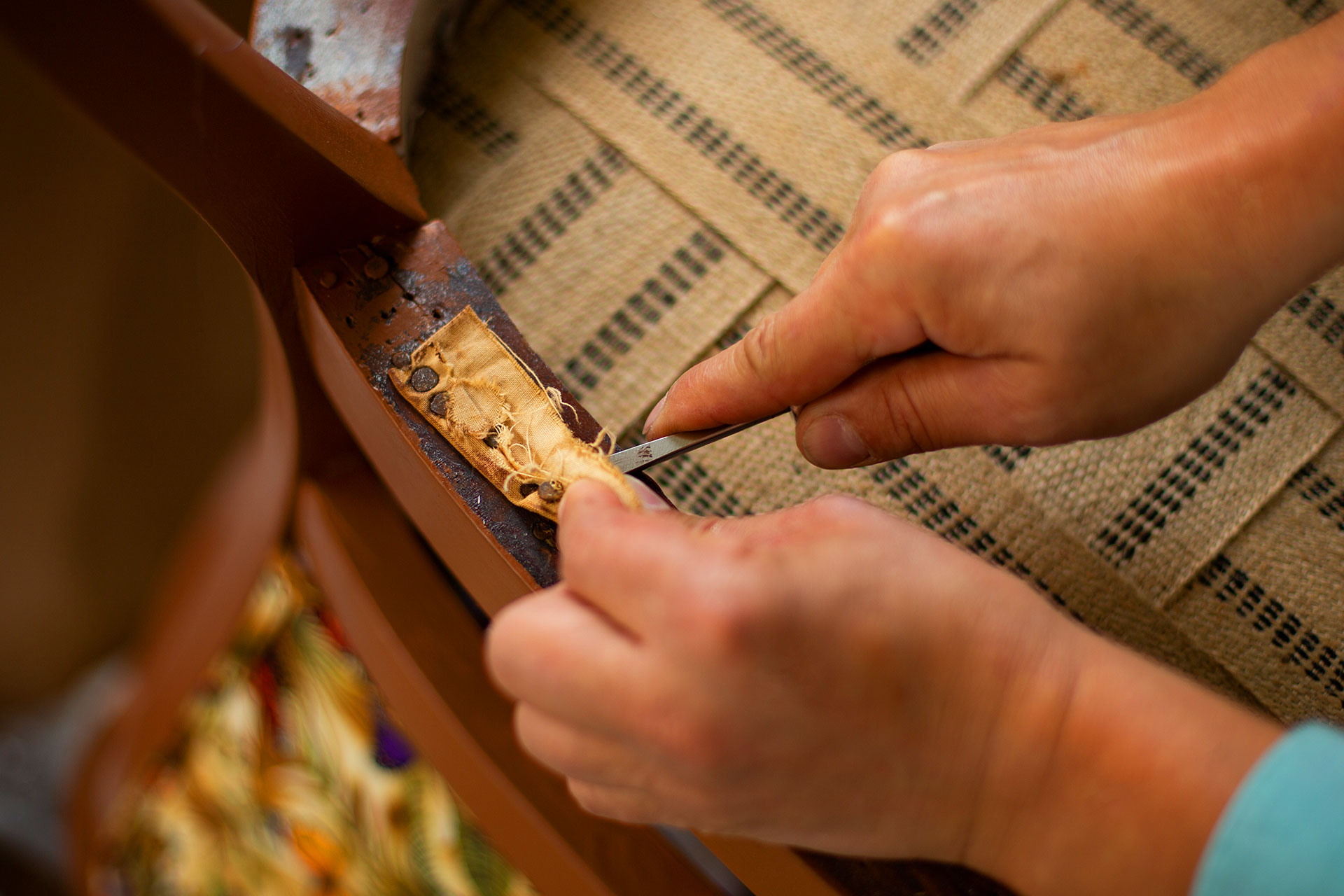
Before any reupholstering begins, you’ll need tools to safely remove old fabric and fasteners. The staple remover, sometimes called a staple lifter or berry picker, features a forked end that slides under staples to pry them out cleanly without tearing the underlying wood or foam.
For stubborn tacks and decorative nails, the ripping chisel (or tack lifter) becomes indispensable. This tool combines a sharp, angled blade with a sturdy handle, allowing you to wedge beneath old tacks and pop them out with minimal damage to the furniture frame.
Measuring and Marking Tools for Precision Work
Accuracy in upholstery isn’t just about aesthetics; it directly impacts how much fabric you’ll need and how professional your final result appears. A quality measuring tape, preferably a retractable cloth tape at least 60 inches long, helps you calculate fabric requirements and ensure symmetrical placement of patterns and tufting.
Fabric marking chalk or disappearing ink markers allow you to make temporary guidelines on fabric without leaving permanent marks. These tools prove especially valuable when creating buttonhole placements for tufted furniture or ensuring straight seam lines on cushion covers.
The upholsterer’s square, typically larger than a standard carpenter’s square, helps ensure perfect 90-degree angles when cutting fabric panels. This tool becomes critical when working with patterned fabrics where alignment matters or when creating box cushions that need precise corners.
Specialized Cutting and Shaping Tools
Beyond basic scissors, professional upholstery work demands specialized cutting implements for different materials and situations. The rotary cutter, paired with a cutting mat, excels at making long, straight cuts through multiple fabric layers simultaneously, perfect for creating piping or bias tape.
Electric foam cutters or hot wire foam sculpting tools allow you to shape and contour foam padding with precision. These tools are essential when creating custom cushions or modifying foam to fit unique furniture shapes, producing clean edges impossible to achieve with standard knives.
Webbing and Support Tools
The webbing stretcher is a wooden tool with a corrugated rubber end that grips jute or elastic webbing, allowing you to pull it taut across furniture frames. Proper tension in the webbing foundation directly affects the comfort and longevity of your upholstered piece.
Spring clips and hog ring pliers work together to secure springs and create the suspension system in traditional upholstery. While many modern pieces use foam exclusively, understanding these tools remains valuable for restoration work or high-end custom projects.
Power Tools That Transform Your Upholstery Work
While hand tools form the foundation, power tools dramatically increase efficiency and expand what’s possible in upholstery projects. The electric staple gun stands as perhaps the most transformative power tool for upholsterers, replacing hundreds of hammer swings with quick trigger pulls.
When selecting an electric or pneumatic staple gun, consider models that accommodate various staple lengths (typically 1/4″ to 9/16″) and offer adjustable power settings. This versatility allows you to work with delicate fabrics on low settings while having enough power to drive staples through multiple layers into hardwood frames.
The importance of having professional-grade tools becomes especially apparent when tackling complex projects. Many DIY enthusiasts discover that investing in quality tools not only improves their results but also helps them understand why professional upholsterers achieve such superior finishes compared to amateur attempts. The right equipment, combined with proper technique, bridges much of the gap between hobbyist and professional work.
Sewing Tools and Equipment for Upholstery
Upholstery work often requires sewing skills, particularly for creating cushion covers, piping, and decorative elements. A heavy-duty sewing machine capable of handling thick fabrics, multiple layers, and even leather is essential for serious upholstery work.
Look for machines with walking feet or dual-feed systems that move fabric layers evenly, preventing shifting and puckering. Industrial or semi-industrial machines often feature more powerful motors and larger throat spaces, accommodating bulky cushion covers and allowing easier maneuvering of large fabric pieces.
Hand-sewing tools remain important even with a good machine. Curved needles allow you to stitch in place on the furniture itself, perfect for blind stitching or ladder stitching closed seams. Heavy-duty thread, typically nylon or polyester upholstery thread, provides the strength needed to withstand daily use and stress.
Piping and Welting Tools
Creating professional-looking piping requires specific feet for your sewing machine, namely, a piping foot or welting foot that allows you to stitch close to the cord. Some upholsterers prefer zipper feet for this purpose, as they offer similar functionality with more visibility.
Bias tape makers streamline the process of creating fabric strips for piping, automatically folding edges as you pull fabric through. These tools come in various sizes to accommodate different cord diameters, from delicate 1/8″ piping to bold 1/2″ statement welting.
Specialty Tools for Advanced Techniques
As your skills advance, certain specialty tools become invaluable for specific techniques. The button press machine allows you to create fabric-covered buttons that perfectly match your upholstery, essential for tufted furniture and decorative accents.
Grommet setters and eyelet tools enable you to add professional hardware for features like laced closures or decorative metal accents. These tools ensure clean, secure installations that won’t tear or loosen over time.
Pro Tip: When building your tool collection, prioritize quality over quantity. A few well-made, professional-grade tools will serve you better than a large collection of inferior implements. Start with essentials like quality shears, a good staple gun, and a proper tack hammer, then expand based on the specific projects you undertake.
Maintenance and Storage of Upholstery Tools
Proper tool maintenance extends their lifespan and ensures consistent performance. Keep cutting tools sharp through regular honing; dull blades require more force, leading to fatigue and imprecise cuts. Oil moving parts on staplers and pliers regularly to prevent rust and ensure smooth operation.
Store tools in an organized manner, preferably in a dedicated toolbox or wall-mounted system. Magnetic strips work excellently for metal tools like scissors and tack lifters, keeping them visible and easily accessible while protecting sharp edges.
Clean tools after each project, removing fabric fibers, adhesive residue, and dust. This practice not only maintains tool condition but also prevents contamination between projects—especially important when moving from dark to light fabrics.
Building Your Upholstery Tool Collection
Starting your upholstery tool collection doesn’t require a massive initial investment. Focus first on versatile basics that you’ll use in every project, then gradually add specialized tools as your skills and project complexity increase.
Beginner’s Essential Kit
- Magnetic tack hammer
- Heavy-duty fabric shears
- Staple remover/tack lifter
- Measuring tape (60″ minimum)
- Fabric chalk or markers
- Basic hand-sewing needles (straight and curved)
- Electric or manual staple gun
Intermediate Additions
- Webbing stretcher
- Rotary cutter and mat
- Heavy-duty sewing machine
- Foam cutting tools
- Upholsterer’s square
- Pliers set (needle-nose, standard, and spring clip)
Advanced Professional Tools
- Pneumatic staple gun system
- Button covering machine
- Industrial sewing machine
- Hot wire foam cutter
- Grommet and rivet setters
- Specialized tufting needles
The right tools for upholstery work transform what might seem like an overwhelming project into a manageable, even enjoyable, creative process. While the initial investment in quality tools might seem substantial, these implements often last decades when properly maintained, making them worthwhile investments for anyone serious about upholstery work. Whether you’re preserving family heirlooms, starting an upholstery business, or simply enjoying a rewarding hobby, building a comprehensive toolkit empowers you to tackle increasingly complex projects with confidence and achieve professional-quality results that stand the test of time.